Podcast: The IMF’s Bad Dream

By | July 28, 2020

(Not tech related, this, so please skip if the IMF and Indonesia don’t float your boat. The BBC World Service Business Daily version of my piece on the IMF’s role in the Asian financial crisis of 1997/8 .  (The Business Daily podcast is here.)  

Loose Wireless 110607

To listen to Business Daily on the radio, tune into BBC World Service at the following times, or click here.

Australasia: Mon-Fri 0141*, 0741

East Asia: Mon-Fri 0041, 1441 
South Asia: Tue-Fri 0141*, Mon-Fri 0741 
East Africa: Mon-Fri 1941 
West Africa: Mon-Fri 1541* 
Middle East: Mon-Fri 0141*, 1141* 
Europe: Mon-Fri 0741, 2132 
Americas: Tue-Fri 0141*, Mon-Fri 0741, 1041, 2132

Thanks to the BBC for allowing me to reproduce it as a podcast.

Libya’s Stuxnet?

By | November 22, 2011

A group of security professionals who have good credentials and strong links to the U.S. government have outlined a Stuxnet-type attack on Libyan infrastructure, according to a document released this week. But is the group outlining risks to regional stability, or is it advocating a cyber attack on Muammar Gadhafi?

The document, Project Cyber Dawn (PDF), was released on May 28 2011 by CSFI – the Cyber Security Forum Initiative, which describes itself as

non-profit organization headquartered in Omaha, NE and in Washington DC with a mission “to provide Cyber Warfare awareness, guidance, and security solutions through collaboration, education, volunteer work, and training to assist the US Government, US Military, Commercial Interests, and International Partners.”

CSFI now numbers about 7,500 members and an active LinkedIn forum.

To be clear, the document does not advocate anything. It merely highlights vulnerabilities, and details scenarios. It concludes, for example:

CSFI recommends the United States of America, its allies and international partners take the necessary steps toward helping normalizing Libya‘s cyber domain as a way to minimize possible future social and economic disruptions taking place through the Internet.

But before that it does say:

A cyber-attack would be among the easiest and most direct means to initially inject into the systems if unable to gain physical engineering attacks against the facility. Numerous client-side attack vectors exist that support payloads capable of compromising SCADA application platforms.

Elsewhere it says:

The area most vulnerable to a cyber-attack, which could impact not only the Libyan‘s prime source of income, but also the primary source of energy to the country, would be a focused attack on their petroleum refining facilities. Without refined products, it is difficult to fuel the trucks, tanks and planes needed to wage any effective war campaign.

The document itself is definitely worth a read; it doesn’t just focus on the cyberweapon side of things. And complicating matters is that one of the contributors to the report, a company called Unveillance, was hacked by a group called LulzSec around the time that the report was being finished. It’s not clear whether this affected release of the report.

Emails stolen from Unveillance and posted online by LulzSec indicate that two versions of the report were planned: one public one, linked to above, and one that would “go to staffers in the White House.” In another email a correspondent mentions an imminent briefing for Department of Defense officials on the report.

The only difference between the two reports that I can find are that the names of some SCADA equipment in Libya have been blacked out in the public version. The reports were being finalized when the hack took place–apparently in the second half of May.

Other commentators have suggested that we seem to have a group of security researchers and companies linked to the U.S. government apparently advocating what the U.S. government has, in its own report International Strategy for Cyberspace released May 17, would define as an act of cyberwar.

I guess I’m surprised by something else: That we have come, within a few short months, from thinking as Stuxnet as an outlier, as a sobering and somewhat shocking wake-up call to the power of the Internet as a vector for taking out supposedly resilient and well-defended machinery to having a public document airily discussing the exact same thing, only this time against non-nuclear infrastructure.

(The irony probably won’t escape some people that, according to a report in the New York Times in January, it was surrendered Libyan equipment that was used to test the effectiveness of Stuxnet before it was launched. I’m yet to be convinced that that was true, but it seems to be conventional wisdom these days.)

Frankly, I think we have to be really careful how we go about discussing these kinds of things. Yes, everything is at arm’s length in the sense that just because bodies such as CSFI may have photos of generals on their web-page, and their members talk about their reports going to the White House, doesn’t mean that their advice is snapped up.

But we’re at an odd point in the evolution of cyberwar presently, and I don’t think we have really come to terms with what we can do, what others can do, and the ramifications of that. Advocating taking out Libyan infrastructure with Stuxnet 2.0 may sound good, but it’s a road we need to think carefully about.

The Gmail Phish: Why Publicize, and Why Now?

By | November 22, 2011

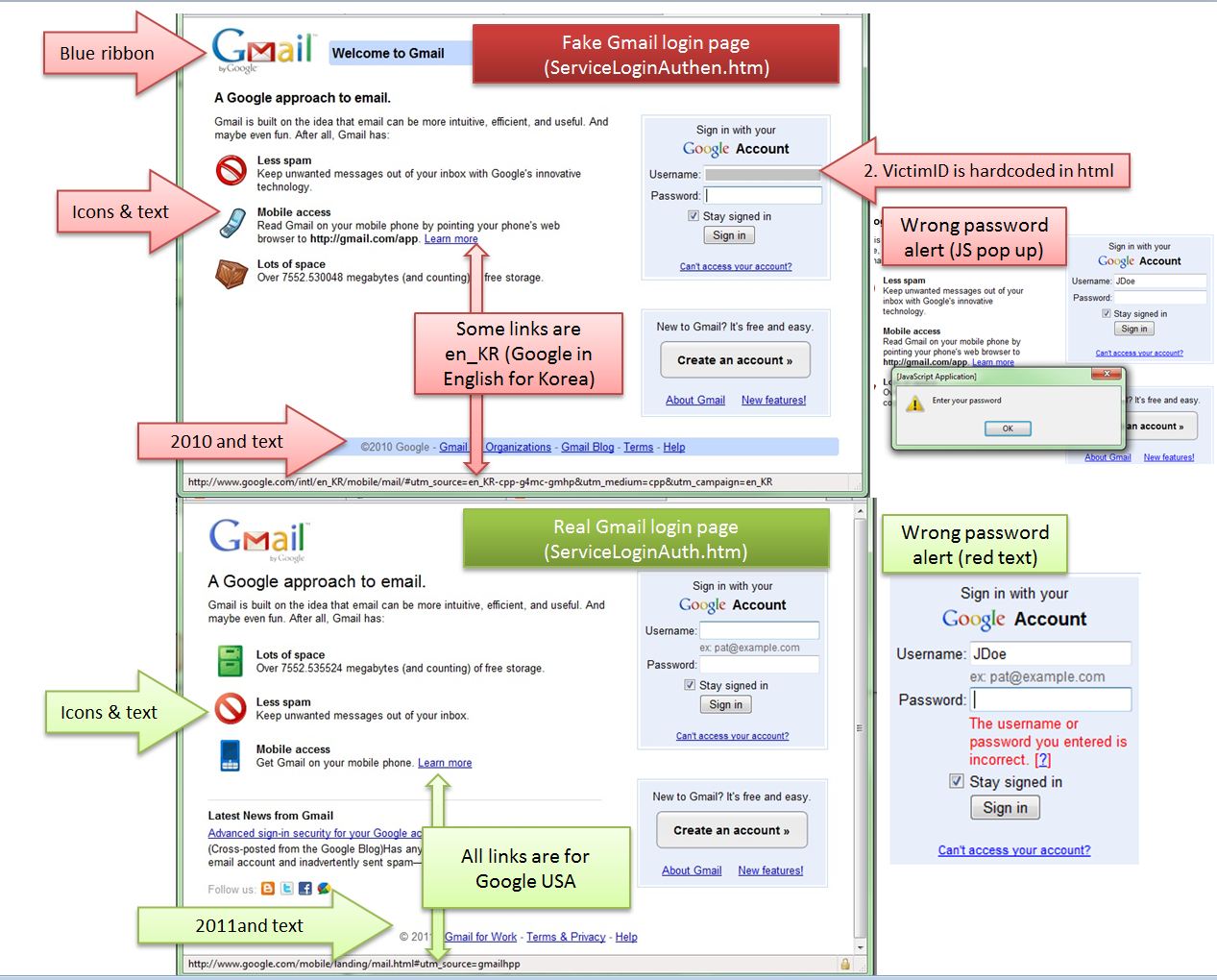
This Google Gmail phishing case has gotten quite a bit of attention, so I thought I’d throw in my two cents’ worth. (These are notes I collated for a segment I did for Al Jazeera earlier today. I didn’t do a particularly good job of getting these points across, and some of the stuff came in after it was done. )

Google says the attack appears to originate from Jinan, but doesn’t offer evidence to support that. I think it would be good if they did. Jinan is the capital of Shandong Province, but it’s also a military region and one of at least six where the PLA has one of its technical reconnaissance bureaus. These are responsible for, among other things, exploitation of foreign networks, which might include this kind of thing. The city is also where the Lanxiang Vocational School is based, which was linked to the December 2009 attacks on Google’s back end systems. That also targeted human rights activists. Lanxiang has denied any involvement the 2009 attacks.

I’d be very surprised if this kind of thing wasn’t going on all the time. And I’m very surprised that senior government officials from the U.S., Korea and elsewhere are supposedly using something like Gmail. There are more secure ways to communicate out there. I think it’s worth pointing out that this particular attack was first identified by Mila Parkour, a researcher, back in February. Screenshots on her blog suggest that at least three U.S. government entities were targeted.

I asked her what she thought of the release of the news now, four months later. Does this mean, I asked, that it took Google a while to figure it out?

As for any other vendor, investigations take time especially if they do not wish to alert the actors and make sure they shut down all the suspicious accounts.

And why, I asked, are they making it public now?

I think it is great they took time to unravel and find more victims and try to trace it. Looks like they exhausted all the leads and found out as much as they could to address it before going public . It has been three months and considering that hundreds of victims [are] involved, it is not too long.

This is not the first time that Google and other email accounts have been hacked in this way, and it’s probably not the last. It’s part of a much bigger battle going on. Well, two: one pits China–who are almost certainly behind it, or at least the ultimate beneficiaries of any data stolen, against regional and other rivals–and the other is Google making these things public. For Google it’s a chance to point out the kind of pressures it and other companies are under in China. Google in January 2010 said it and other companies had been under attack using tricks that exploited vulnerabilities in Google’s network to gain unauthorized access.

Google says it went public because it wants to keep its users safe. This from Myriam Boublil, Head of Communications & Public Affairs at Google Southeast Asia:

“We think users should be aware of the disturbing campaign we’ve uncovered to collect user passwords and monitor user email.  Our focus now is on protecting our users and making sure everyone knows how to stay safe online”

This  attack is not particularly sophisticated, but it involves what is called spear phishing, which does involve quite extensive social engineering techniques and reveals the object of the attacker’s interest is not random, but very, very specific. If you judge a perpetrator of a crime by their victim, you don’t have to be a rocket scientist to figure out who is the ultimate recipient of any intelligence gathered.

Podcast: Microsoft and Skype

By | July 28, 2020

The BBC World Service Business Daily version of my piece on Microsoft and Skype.  (The Business Daily podcast is here.)  

Loose Wireless 110520

To listen to Business Daily on the radio, tune into BBC World Service at the following times, or click here.

Australasia: Mon-Fri 0141*, 0741 

East Asia: Mon-Fri 0041, 1441 
South Asia: Tue-Fri 0141*, Mon-Fri 0741 
East Africa: Mon-Fri 1941 
West Africa: Mon-Fri 1541* 
Middle East: Mon-Fri 0141*, 1141* 
Europe: Mon-Fri 0741, 2132 
Americas: Tue-Fri 0141*, Mon-Fri 0741, 1041, 2132

Thanks to the BBC for allowing me to reproduce it as a podcast.

How To Use Google To Get Round Super Injunctions

By | November 22, 2011

Screen shot 2011 05 23 at AM 06 45 41

As you may know there’s been lots of talk about a so-called super injunction taken out by a British footballer against revealing his name in connection with an affair he’s alleged to have had with a minor UK celebrity. One British newspaper has ignored the injunction, effectively identifying him. Twitter has also been abuzz.

It amused me to notice that Google has ignored the injunction, too, effectively.

With Google Instant autosearch on, start typing “super injunction footballer imogen” and the answer–or at least what everyone assumes is the answer will appear in the drop down list below. As I’ve illustrated above, but with the name blanked out.

I’ve talked about how to get the best out of this feature before. Check out Google Suggest: Your Company + Scam – loose wire blog